
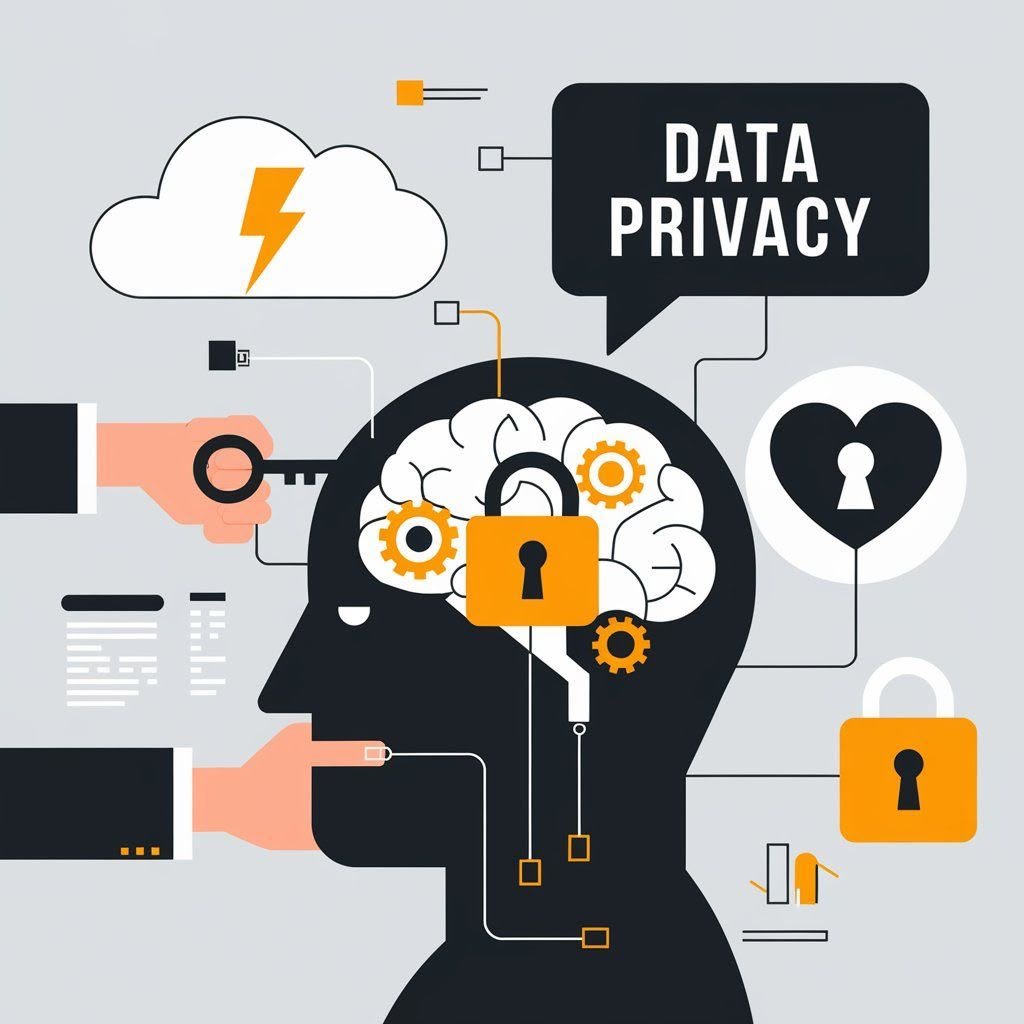
The New Currency of the Digital Age
In today’s connected world, data has become one of the most valuable resources. Every search, purchase, application download, social media interaction, and online transaction can generate information about an individual. Businesses use this information to understand customers, improve services, personalize experiences, and make strategic decisions. However, this growing dependence on data also creates significant privacy and data concerns.
At the same time, people increasingly expect organizations to protect their personal information. Therefore, privacy is no longer simply an issue for technology departments or legal teams. It has become a fundamental business responsibility. Organizations that collect and process data must understand what they are collecting, why they need it, how they will protect it, and how long they will retain it.
What Personal Data Really Means
Personal data includes much more than a person’s name or email address. It can include contact details, identification information, location data, browsing activity, purchase history, device information, photographs, preferences, and online behavior. Furthermore, modern technologies can combine seemingly unrelated information to create detailed profiles of individuals.
Consequently, users may provide more information than they realize. A single application might collect information about device usage, while another service records purchasing behavior. When organizations combine these datasets, they can gain a much deeper understanding of an individual. Therefore, businesses should treat every piece of personal information as potentially valuable and potentially sensitive.
Why Data Collection Creates Privacy Risks
Data collection can provide important benefits. For example, organizations can analyze customer behavior to improve products, detect fraudulent transactions, personalize services, and identify operational problems. However, excessive or unnecessary data collection can create substantial risks.
First, organizations increase their exposure when they store information they do not genuinely need. Secondly, unauthorized parties may attempt to access valuable databases. Finally, organizations may use information in ways that customers did not expect. As a result, responsible data management requires businesses to balance legitimate data needs with individual privacy expectations.
The Hidden Cost of Convenience
Digital services often exchange convenience for information. For instance, users may receive personalized recommendations, automatic location services, customized advertisements, or faster authentication after providing personal data. Although these features can improve the user experience, they can also encourage people to share information without fully understanding the consequences.
Moreover, privacy policies can contain complicated legal language that ordinary users may struggle to interpret. As a result, people sometimes accept terms without knowing exactly what information an organization collects or how it uses that information. Businesses should therefore communicate their data practices in clear, accessible language rather than relying exclusively on lengthy legal documents.
Cybersecurity and the Threat of Data Breaches
Strong privacy practices depend heavily on effective cybersecurity. Even when an organization has legitimate reasons to collect information, inadequate security can expose that information to unauthorized individuals. Data breaches can result from stolen credentials, phishing attacks, malicious software, system vulnerabilities, insider threats, or simple human errors.
Therefore, organizations should adopt multiple layers of protection. Encryption, access controls, authentication mechanisms, security monitoring, employee training, regular software updates, and incident-response procedures can reduce exposure. Additionally, organizations should regularly review their security practices because cyber threats continue to evolve.
Artificial Intelligence and the Privacy Question
Artificial intelligence has introduced another important dimension to privacy and data concerns. AI systems often require substantial amounts of information for training, testing, personalization, or operation. Consequently, organizations must carefully consider what data they provide to AI systems and whether individuals understand how their information may be processed.
Furthermore, AI can identify patterns that humans may not notice easily. A system can potentially combine different data points to generate predictions, classifications, or profiles. Therefore, organizations should establish clear rules for responsible AI data use. They should also evaluate whether data collection is necessary, whether information has appropriate safeguards, and whether the resulting system could create unexpected privacy risks.
Consent Must Mean More Than a Checkbox
Consent plays an important role in responsible data practices. However, simply asking users to click an “Accept” button does not necessarily create meaningful understanding. Effective consent should involve clear information about what data an organization collects, why it collects the data, and how it intends to use it.
In addition, users should have reasonable choices when circumstances allow. Organizations should avoid presenting unnecessary data collection as a condition for accessing basic services. Instead, they should explain their practices transparently and provide appropriate controls. By doing so, companies can build stronger relationships with customers while also demonstrating respect for individual autonomy.
Data Minimization: Collect Only What You Need
One effective approach to reducing privacy risk is data minimization. This principle encourages organizations to collect only the information required for a clearly defined purpose. For example, a service may need an email address to create an account, but it may not need a user’s precise location or unrelated personal preferences.
Furthermore, organizations should establish retention policies. Keeping information indefinitely can increase the potential impact of a security incident. Therefore, businesses should determine how long they genuinely need particular categories of information and securely dispose of data when it no longer serves a legitimate purpose.
The Role of Transparency in Building Trust
Trust has become increasingly important in the digital economy. Customers want to know whether organizations will treat their information responsibly. Therefore, transparency should become a central component of every organization’s privacy strategy.
Organizations can improve transparency by publishing understandable privacy notices, explaining data practices in straightforward language, providing meaningful privacy controls, and communicating significant changes clearly. Moreover, companies should avoid making vague statements that leave customers uncertain about how their information is actually used. Clear communication can help transform privacy from a compliance obligation into a foundation for customer trust.
Employees Are Part of the Privacy Equation
Technology alone cannot solve every privacy problem. Employees also play a critical role in protecting personal information. An employee who accidentally sends confidential information to the wrong recipient or falls victim to a phishing attack can create serious consequences for an organization.
For this reason, companies should provide regular privacy and security training. Employees should understand how to recognize suspicious requests, handle sensitive information, create secure passwords, report incidents, and follow organizational data policies. Additionally, managers should establish clear procedures so employees know exactly what to do when they encounter a potential privacy problem.
Privacy Regulations and Corporate Responsibility
Governments and regulators around the world have introduced privacy frameworks to establish expectations for organizations that collect and process personal information. These frameworks can address areas such as transparency, lawful processing, individual rights, security, data retention, and organizational accountability.
However, regulatory compliance should not represent the entire privacy strategy. An organization can meet a minimum legal requirement while still creating an experience that customers consider intrusive or confusing. Therefore, responsible organizations should look beyond compliance and develop privacy practices that reflect ethical considerations, customer expectations, and long-term risk management.
Protecting Privacy in the Age of Personalization
Personalization has become a major feature of modern digital services. Companies analyze customer information to recommend products, customize content, and create targeted experiences. Although personalization can provide value, excessive personalization can make users uncomfortable when they realize how much information a company appears to know about them.
Consequently, organizations should carefully consider the boundaries of personalization. They should evaluate whether the information used is necessary and whether the resulting experience respects reasonable customer expectations. Furthermore, companies should provide appropriate privacy controls so users can make informed decisions about certain forms of personalization where applicable.
A Practical Privacy Framework for Organizations
Organizations can address privacy and data concerns by developing a structured privacy framework. First, they should identify the types of personal data they collect. Next, they should document why they collect each category and determine who can access it. They should then establish appropriate security, retention, and deletion procedures.
Additionally, organizations should regularly assess third-party relationships. External vendors may process customer information on behalf of a company, which means privacy responsibilities can extend beyond the organization’s internal systems. Consequently, companies should carefully evaluate vendors, establish appropriate contractual requirements, monitor risks, and review data-sharing practices periodically.
Empowering Individuals to Protect Their Data
Individuals also have an important role in protecting personal information. Users can review privacy settings, limit unnecessary permissions, use strong and unique passwords, enable multifactor authentication, and carefully evaluate requests for personal information. They can also periodically review accounts and remove services they no longer use.
However, individuals cannot carry the entire responsibility for privacy. Organizations often possess greater technical resources and greater control over how information is collected and processed. Therefore, businesses, technology providers, regulators, and individuals must share responsibility for creating safer digital environments.
Building a Privacy-First Digital Future
The future of technology will depend not only on innovation but also on responsible information management. As artificial intelligence, connected devices, analytics, cloud services, and digital platforms continue to develop, organizations will gain access to increasingly sophisticated data capabilities. At the same time, these capabilities will create new questions about privacy, transparency, security, and individual control.
Ultimately, responsible data management requires more than protecting databases from hackers. It requires organizations to think carefully about what information they collect, why they collect it, how they use it, who receives it, and when they should delete it. By adopting data minimization, meaningful transparency, strong cybersecurity, responsible AI practices, and privacy-aware organizational cultures, businesses can reduce unnecessary risks.
Conclusion: Turning Data Responsibility into Digital Trust
Privacy and data concerns will continue to play an important role in the development of the digital economy. Data helps businesses understand their audiences, improve services, create personalized experiences, and make better decisions. However, collecting and using customer information also comes with an important responsibility to protect privacy, maintain security, and build trust.
For digital marketers, responsible data practices are becoming increasingly important. Effective digital marketing strategies should not focus only on reaching more people; they should also consider how customer information is collected, stored, analyzed, and used. Transparency and responsible communication can help businesses create stronger relationships with their audiences.
Privacy also connects closely with SEO and digital marketing. Businesses need to build an online presence that provides value while respecting users’ expectations around their personal information. Similarly, responsible content marketing can help brands educate audiences and communicate clearly without compromising trust.
As artificial intelligence, analytics, social media, and other digital technologies continue to evolve, businesses must place responsibility at the center of their digital strategies. Combining technology with transparency, ethical practices, and human judgment can help organizations create sustainable digital experiences.
Ultimately, data responsibility is not only a privacy issue—it is a foundation for digital trust. Businesses that respect their audiences and communicate responsibly can build stronger and more credible brands in an increasingly connected world.
To explore more topics related to SEO, digital marketing, content marketing, and emerging digital trends, visit my Digital Marketing Blog, where I share my learning and insights as I develop my career in digital marketing.